 The Wallet Shoppe

What’s the best material for a messenger bag? That depends what you want to use it for, but we do have a favorite!
It’s no secret that we’re big fans of the messenger bag as a stylish but practical accessory for men.
This is especially the case if you are a professional who needs an aesthetically pleasing, durable, spacious, and well-organized bag.
Messenger bags stay popular with professionals and students because they keep both hands free and let you reach gear at your hip without taking the bag off.
That said, messenger bags can be made of various materials, which will determine how good it looks, how durable the bag is, and how long it will last.
What is a Messenger Bag, and Why Choose One?
First - a 60 second recap on what exactly messenger bags are and what makes them so beneficial.
What Exactly is a Messenger Bag?
A messenger bag is a style or type of crossbody bag with a single shoulder strap worn across the body. In other words, the strap is worn on one shoulder, say your left, and the bag is worn on the opposite hip, which would be your right side.
This is a popular style for students and professionals. There are a few different subcategories, such as the satchel, saddle, vertical, military, and briefcase-style messenger bags, each having a slightly different appearance.
Why Choose a Messenger Bag?
-
People prefer messenger bags as they allow both hands to be free to carry other belongings
-
Messenger bags are often preferred because you can choose which side to wear them on, so you can access them with your dominant hand; check whether the particular strap is reversible
-
Messenger bags are usually quite spacious and well organized, often with separate sections; newer styles may have dedicated laptop pockets
-
Messenger bags look stylish and come in many designs, making them suitable for students, professionals, men and women
Best Material for a Messenger Bag
Here’s how the common materials stack up, advantages and disadvantages.
Leather
Leather is hands-down our favorite material for messenger bags, for a few reasons. We like the feel, the structure and the way a well-made leather bag ages.
Good leather is tough, though smooth, suede and coated finishes show wear differently. In fact, some (that would be us!) would argue that leather simply gets better over time - developing a patina and a personality.
Moreover, a natural leather bag can potentially last for decades if cared for according to its finish.
Moreover, quality leather just looks effortlessly stylish, an added bonus.
However, leather often costs more and adds weight. It also needs appropriate cleaning and conditioning, and it is not automatically rainproof. Check the empty weight before adding your laptop and charger.
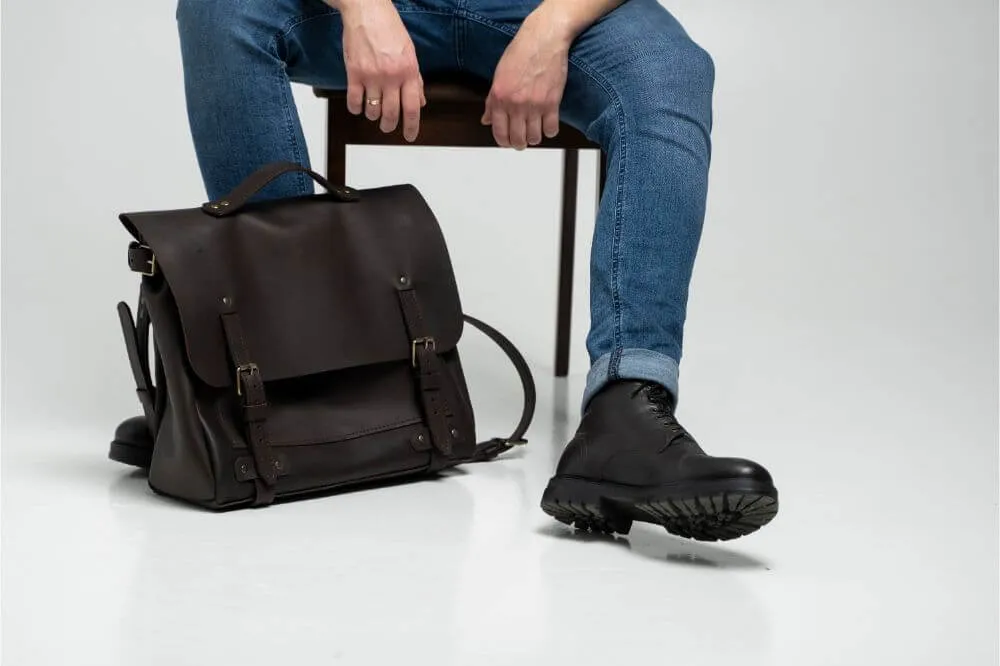
If leather is your pick, this handcrafted option is a great example of what the material can offer:
Synthetic Leather
Synthetic leather is another popular material for messenger bags. Synthetic or faux leather is typically polyurethane made to look like genuine leather, though there are other vegan leather options being developed all the time.
In terms of the appearance, to the untrained eye, you might not be able to tell that it’s not genuine leather if it’s well made.
Smell alone is no way to identify leather; check the material label and backing instead.
Of course, it’s far more affordable and ideal for people operating on a tight budget, or people looking for goods not made from animal products. PU or PVC coatings can peel or crack with wear, so look at the backing, seams and coating as well as the appearance.
Vinyl
Another material used for making messenger bags is vinyl. You can get clear vinyl bags that allow you to see the contents and those backed with fabrics to make them opaque.
It’s not the first choice for messenger bags due to its glossy and, admittedly, somewhat cheap appearance and connotations.
A vinyl surface can resist water and wipe clean easily, but seams, stitching holes and zippers can still let rain into the bag. Its durability also depends on the backing and thickness. The glossy finish is not our favorite look. So although you can find fun vinyl bags that will work great as weekend totes, it’s probably not something you’d want to bring to a professional setting.
Canvas
Another option is canvas, an excellent material in terms of its appearance. It looks rustic and classic at the same time, an aesthetic many people like.
A substantial canvas weave can handle everyday wear, but it can still tear. Strong strap attachments, reinforced corners and good stitching matter just as much when carrying a heavy load.
Canvas is flexible; padding, stiffeners and the bag’s construction determine how much support it gives a laptop. Untreated cotton canvas absorbs rain, while a wax treatment adds water resistance. Filson’s Rugged Twill is a cotton twill with a wax treatment, rather than plain canvas. Neither fabric alone guarantees a waterproof finished bag.
For a canvas messenger with that rugged, classic look:
Wool
Wool is not a common option for messenger bags, but it is still a material that is occasionally used.
Many like the appearance of wool, particularly for its texture and feel. It looks soft, warm, and comfortable. In addition, a high-quality wool bag can have good structural integrity if made thick enough.
Wool is naturally stain resistant, but a wool bag can still need careful cleaning. Woolmark’s care advice emphasizes gentle treatment; the bag’s own care label takes priority where leather trim, liners or stiffeners are involved. For a rainy commute, look for a protective liner or cover rather than relying on wool alone. Definitely not our top recommendation!
Neoprene Rubber
Synthetic rubber or neoprene is another bag option, although bags made of this are usually more functional than aesthetically pleasing.
Neoprene foam can add cushioning and a soft feel. Its sheets resist water, but a stitched neoprene bag is not necessarily waterproof. Although they don’t look all that nice, they have some benefits.
Polyester
Polyester is a good option if you want something that looks decent and is cost-effective. The weave, coating and liner determine how well a particular bag resists wear and rain. It’s not the best material for a messenger bag, but certainly not the worst.
Nylon and Ballistic Nylon
Nylon is worth considering for a work or travel bag where abrasion resistance matters. Ballistic nylon uses a substantial woven construction; CORDURA Classic is another nylon fabric family offered in several weights and finishes. Neither name means that a bag is bulletproof or that its seams are waterproof.
For a wet commute, look beyond the outer fabric. Timbuk2’s Classic Messenger combines an exterior fabric with a waterproof TPU liner. The closure and seams still matter, and a padded laptop compartment serves a different purpose from a rain barrier.
Leather is still our pick for the best messenger bag material - we like the patina and classic look. For lighter travel or frequent rain, a coated nylon or polyester bag with a protective liner may suit you better.
Before You Go…
A bag like this can be one of a man’s most visible and stylish accessories, especially when it’s worn properly. Take a look at our next article to make sure you’re getting the most out of your bag: