 The Wallet Shoppe

You might be thinking, “Why should I even bother with a wallet when my phone does it all?”
I get it. Our world is becoming increasingly paperless, and the need for a traditional wallet seems to be shrinking. But there’s more to this story than meets the eye.
So, are expensive wallets worth it? Before we start, think about your own experience with wallets: the worn-out one in your pocket, the fancy one you got as a gift, or the cheap one that barely lasted a few months. Keep that in mind as we go.
Are You Buying a Wallet or a Story?
There’s no denying that a big part of the appeal of a luxury wallet is the story it tells. Brands like Gucci and Montblanc have built powerful narratives around their products that say success, taste and accomplishment. We’re naturally drawn to stories, and owning a high-end wallet can feel like adding a prestigious new chapter to your own.
But, as Spider-Man’s Uncle Ben wisely reminds us, with great power comes great responsibility. If you’re thinking about a wallet that whispers wealth, be honest with yourself about why. Does the story fit who you are, or who you want to be? If it does, great. It’s fine to love a brand or a finish, and you don’t need to pretend every purchase is about maximum utility. Just don’t confuse the logo with the quality: liking a Montblanc doesn’t make every cheaper wallet badly made.
What Is Worth Paying For?
When it comes to picking the perfect wallet, durability matters. You want it to stand up to daily wear and tear without falling apart or looking shabby. Expensive wallets often promise better materials and craftsmanship, but a high price alone doesn’t guarantee either.
So look for even stitching, neatly finished edges, and pockets that hold your cards securely without making them a fight to get out. If the shop allows it, try the wallet with your usual load inside. An empty wallet can feel wonderfully slim and turn awkward once your cards and cash go in.
Check the material description too. “Genuine leather” doesn’t tell you how thick the leather is, how it was finished, or how well the wallet was put together. Our wallet quality checklist covers what to look at.
And a clear repair policy is worth more than a vague promise that a wallet will last a lifetime. Check what the maker covers and whether worn stitching or a broken clasp can be fixed.
Functionality: Are You Getting More Bang for Your Buck?
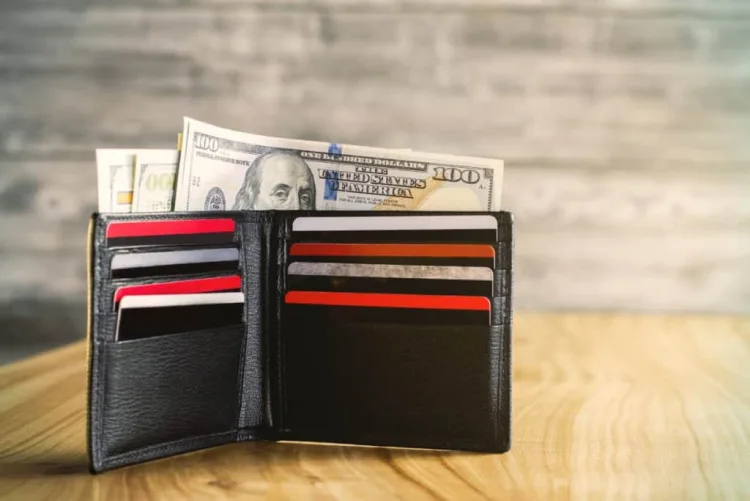
Nobody wants a bulky wallet causing discomfort in their pocket. Expensive wallets may boast high-quality materials, but that doesn’t automatically give you a slim, comfortable design. A luxury bifold can still have too few card slots, or a bill compartment that doesn’t suit your currency. Meanwhile, plenty of affordable minimalist wallets are built around carrying just the essentials.
The same goes for RFID blocking. You might expect an expensive wallet to include it as standard, but that’s not always the case, and many affordable wallets have it. Check the spec of the particular model.
Take a moment to think about your ideal wallet. What does it need to do for you? Write down what you actually carry (cards, notes, coins, maybe a key), then decide whether the extra cash ticks more of those boxes.
Leather or Something Else?
Do you value the timeless charm of real leather, or would you rather have something different? Leather wears in and develops a patina; you might love that, or prefer a finish that stays uniform. Fabric and synthetic wallets offer other textures, often without the weight of a thick leather bifold.
PU leather can look a lot like the real thing for much less money, but don’t assume a leather-look wallet is animal-free (check the backing), or automatically better for the planet. How it’s made and how long you keep it matter more.
The Longevity Factor
A well-made leather wallet can last for years, maybe even long enough to pass on. A cheap one might need replacing much sooner. So is one good wallet cheaper in the long run than several cheap ones? Sometimes!
Here’s a simple way to check: divide the price by the number of years you realistically expect to use it, and do the same for the cheaper option. Be honest, though. Don’t give the expensive one an imagined ten-year lifespan while assuming the cheap one will die next spring.
Also think about why you replace wallets. If you like to change styles every year or two, you’ll pay for durability you never use. If you carry a wallet until it falls apart, construction deserves more of your budget.
What about resale? Unlike watches or jewelry, wallets don’t usually hold their value. There’s a market for gently used designer wallets from sought-after brands, but don’t count on getting much of your money back.
The Wallet as Style Icon
For another take on this, we liked this Wall Street Journal article, The Best Men’s Style Move? Get off Apple Pay and Buy a Handsome Wallet (Andrew Barker, April 2023). Here’s the TL;DR:
- Wallets have gone from an essential to an “old-world comfort”.
- Sales are sliding, but a wallet is still a subtle way to show off your style (and, yes, your status).
- Small leather goods are the entry-level way into a luxury brand. Bottega Veneta and Goyard were the names one New York personal shopper’s clients asked for most, and neither relies on a big logo.
- Compact cardholders are the popular choice, and zippered wallets offer more room, but don’t stuff either to the brim.
- Some people switch wallets with the season and the outfit.
We can’t find a lot to argue with in those points! (Especially the bit about not stuffing it to the brim. George Costanza gets a mention too.)
The Wallet Verdict: Your Money, Your Choice
So, are luxury wallets worth it? It boils down to what matters most to you. Here’s a quick summary:
Pros:
- A luxury wallet can boost your confidence and project a certain image.
- A well-made wallet, cared for, can last for many years.
Cons:
- Wallets spend most of their time in your pocket, so the chances to show off your investment are limited.
- A flashy designer wallet can attract the wrong kind of attention.
- Unlike watches or jewelry, wallets don’t usually keep their value.
If the premium wallet feels better in use and you can comfortably afford it, that’s a perfectly good reason to buy it. If the only thing you can point to is the logo, at least you know what you’re paying for.
Before You Go…
If you’ve decided an expensive wallet is worth it for you, it doesn’t stop there. How do you know the wallet you’re looking at is actually high-quality, not just high-priced? Read our next article to find out: How To Tell If a Wallet Is High-Quality