 The Wallet Shoppe
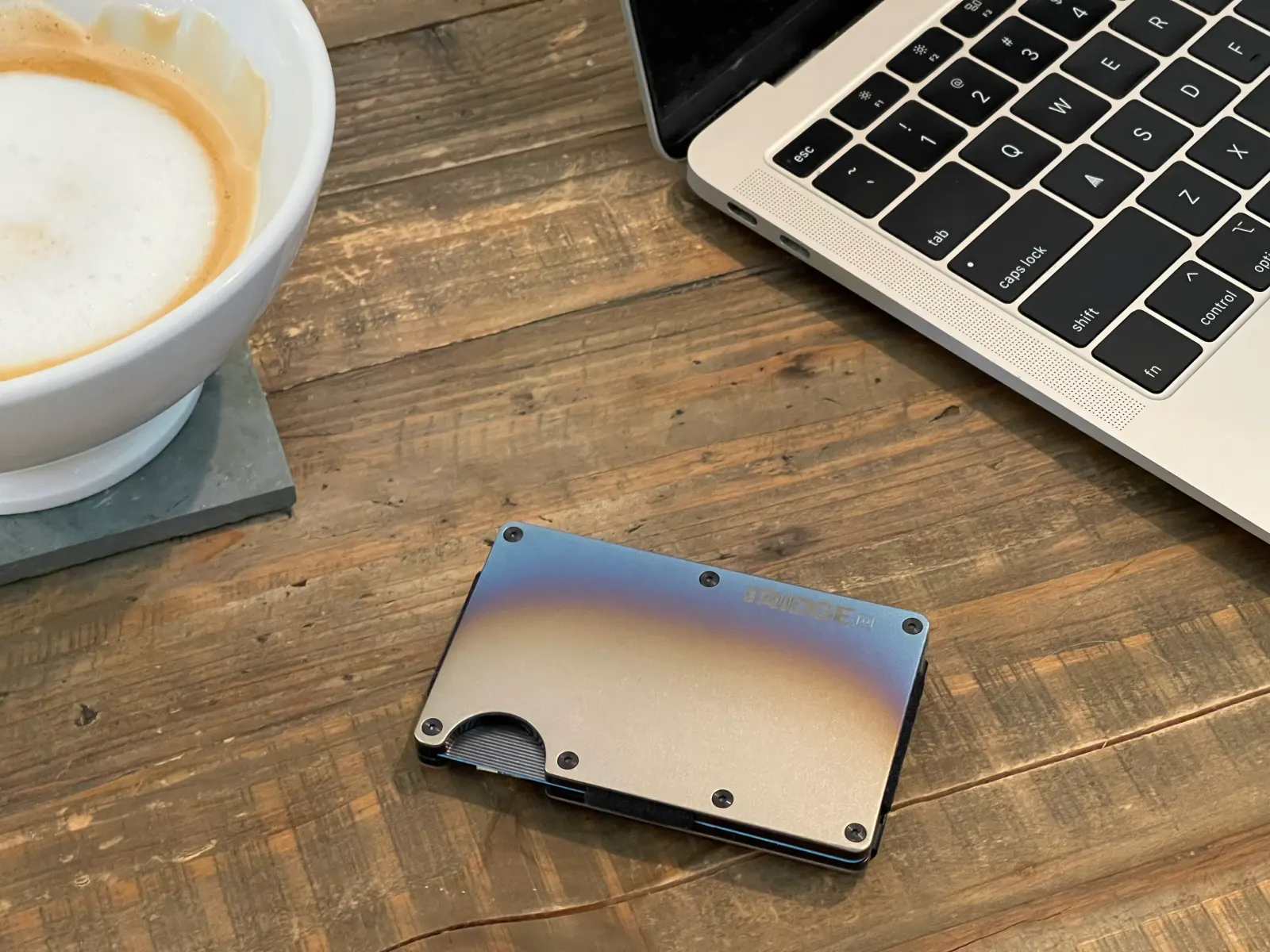
Minimalist wallets solve the “how do I get my cards out” problem in different ways: a button-operated ejector that raises a stack, or a clip-style holder you retrieve cards from by hand. The two examples here are QLD’s aluminum-chamber bifold in a carbon-fiber-look finish and Wallet Design Co’s folded carbon-fiber cardholder. Material and mechanism are separate choices.
The Ejector: QLD Pop-Up Bifold
Press the button and the cards rise into a staggered stack. The linked QLD bifold has an aluminum chamber, a wrap with additional card pockets, a front ID window, and a separate cash compartment. Its magnetic cover holds the wrap closed.
The listing describes capacity for twelve cards in total: six in the chamber, one ID, four in the wrap, and one on the card-case exterior. That is a whole-wallet count; putting twelve into the ejector isn’t the intended layout. The carbon-fiber option is a finish choice, not proof that the leather-like wrap is a structural carbon-fiber plate.
Choose it if you want pop-up access plus separate cash and ID storage. The extra wrap and pockets add bulk compared with a clip alone. Owner lhost60 likes the pop-up access but finds it thicker than their previous wallet in the listing’s reviews.
The Plate: Wallet Design Co Carbon Fiber Cardholder
This design skips the ejector and folds a carbon-fiber plate into a clip-style holder. A cutout gives your thumb access to the contents. The listing describes matte 3K carbon fiber and space for cards and bills.
The lack of a trigger is the appeal, but the clip still needs to retain what you put in it. You retrieve and separate the cards manually, rather than getting the spaced stack that QLD’s button provides. Start with the cards and folded bills you actually use; a maximum-capacity claim doesn’t tell you how easily a full load comes out.
Durability
The QLD chamber is rigid, while its wrap and magnetic closure are additional parts to consider. A stiff button, weak card retention, or a worn pocket can matter as much as a scratched exterior.
The carbon holder has fewer separate components, but it can still chip, crack, or lose its grip. “No ejector” doesn’t mean “nothing can wear out.” Neither material guarantees a particular lifespan or protects cards from every crushing load.
Card Access
QLD presents the cards in a staggered stack with a button push. Wallet Design Co uses manual retrieval through its cutout. We’d choose the ejector for that presentation; we’d choose the carbon holder for a simpler clip layout.
With either one, check retention with a small load as well as a full one. Thick or embossed cards change how a stack fits. Cash is another difference: QLD gives it a separate compartment, while the carbon design clips the folded contents together.
RFID Blocking
Both listings advertise RFID blocking, but that claim concerns compatible radio communication, not the printed number or magnetic stripe on a card. EMV contactless security also doesn’t mean a card cannot be read; reading data and reproducing a valid chip transaction are different things.
Check which compartments the claim covers and remove a protected card before tapping it. Our RFID guide explains what shielding can do and how to check a card inside and outside a protected pocket.
Are These Worth It?
For someone trying minimalist carry, either layout is worth considering. The QLD is the choice for button-operated access and separate storage; the carbon holder is the choice for a slim clip without an ejector. Compare the loaded fit and current offer with Ridge or Ekster instead of assuming every version costs less or uses the same mechanism.