 The Wallet Shoppe

Two of Ekster’s best-known smart wallets are the leather Parliament and the all-metal Aluminum Cardholder. Both eject your cards with a button push, both pair with Ekster’s tracker card, both block RFID. The choice between them comes down to the leather wrap, extra storage, and how much you want in your pocket. Prices vary by version and finish.
The original article covered the Parliament and Aluminum Cardholder; Ekster now uses Ekster Wallet and Ekster Cardholder for the current models. Check the version when shopping, especially the separate Pro models.
Background
People have been losing their wallets for as long as they’ve been carrying them in back pockets. Beyond the obvious security risk, it’s a logistics nightmare. Cancelling cards, replacing the driver’s license, working through a week without your stuff.
The Smart Wallet category exists to fix that. A small Bluetooth tracker card sits inside the wallet and pairs with an app, so a misplaced wallet can call back to you instead of disappearing.
What is a Smart Wallet?
Smart wallets pair with a phone app through a tracker that uses Bluetooth and, depending on the version, Apple’s Find My or Google’s Find Hub network. The card approach is the most flexible. Pull it out, drop it in luggage, track a different thing for a trip.
Founded in 2015 by two friends from Amsterdam plus a Kickstarter veteran, Ekster was one of the pioneers in the smart wallet space. They wanted to fix two problems at once: the bulky-wallet problem (skip the cards-and-receipts pile) and the lost-wallet problem (make the wallet findable). The Parliament and Aluminum Cardholder are their two answers.
If you’re cross-shopping, Bellroy takes a leather-first design approach with room for a separately bought tracker card, and the Ridge goes full metal minimalist and can also carry a slim tracker.
Parliament — full-grain leather over an aluminum chassis. Extra leather pockets and folded-cash storage around a smaller ejector compartment.
Aluminum Cardholder — all-metal slim wallet. Holds 4–6 cards in the ejector depending on thickness, with additional storage under the backplate. No bifold.
Review of the Ekster Wallets
Both wallets share Ekster’s core mechanism: a push-button ejector that fans your cards out in a stair-step so you can pick the one you want. From there they diverge in material, capacity, and presence in your pocket. Looking at both across four dimensions: Size, Durability, Aesthetics, and Function.
Size
Parliament — the leather wrap adds pockets and folded-cash storage around the ejector. Don’t confuse the wallet’s total card capacity with the number that fits inside the mechanism.
Aluminum Cardholder — Ekster’s standard Cardholder manual lists 4.1 × 2.3 × 0.29 inches, with up to six non-embossed cards or four embossed cards in the ejector. Extra cards go under the backplate, where you remove them by hand.
The Aluminum skips the leather bifold, which is its main appeal for front-pocket carry. Loading the backplate with extra cards and bills adds thickness, though; compare the wallets with what you actually intend to carry.
Bottom line: Aluminum wins on the simpler pocket profile. If you need the extra leather pockets, the Parliament gives you somewhere to put those cards.
Durability: Parliament
The Parliament’s full-grain leather is European-tanned and wraps around an aluminum core. The leather will scuff, soften, and patina. The aluminum frame does not develop a leather patina.
Durability: Aluminum Cardholder
The Aluminum Cardholder is exactly what it says: an aluminum shell around the ejector mechanism. The metal shell is rigid, but it can still scratch or dent, and the ejector is a moving part. The trade is no patina, no story over time. Don’t expect the finish to look new forever.
Bottom line: Leather develops patina; aluminum shows wear differently. Pick the look you prefer, but neither material guarantees the mechanism will last forever.
Aesthetics
The Parliament reads as a leather wallet with a clever mechanism inside. From the outside, most people can’t tell it’s a smart wallet at all. The original leather colors included browns, black, green, and blue, showing off the leather without shouting.
The Aluminum reads as engineering. The brushed metal frame is honest about being a metal wallet, with finishes ranging from dark colors to brushed metal. The selection changes by model. It’s the wallet that signals “I think about my carry.”
These are two different aesthetic statements. A Parliament looks at home on a leather desk; an Aluminum looks at home next to your AirPods.
Bottom line: Aesthetics is a judgment call. The honest read is leather for traditional taste, aluminum for modern.
Function
This is where the wallets are most similar.
Ejector Mechanism
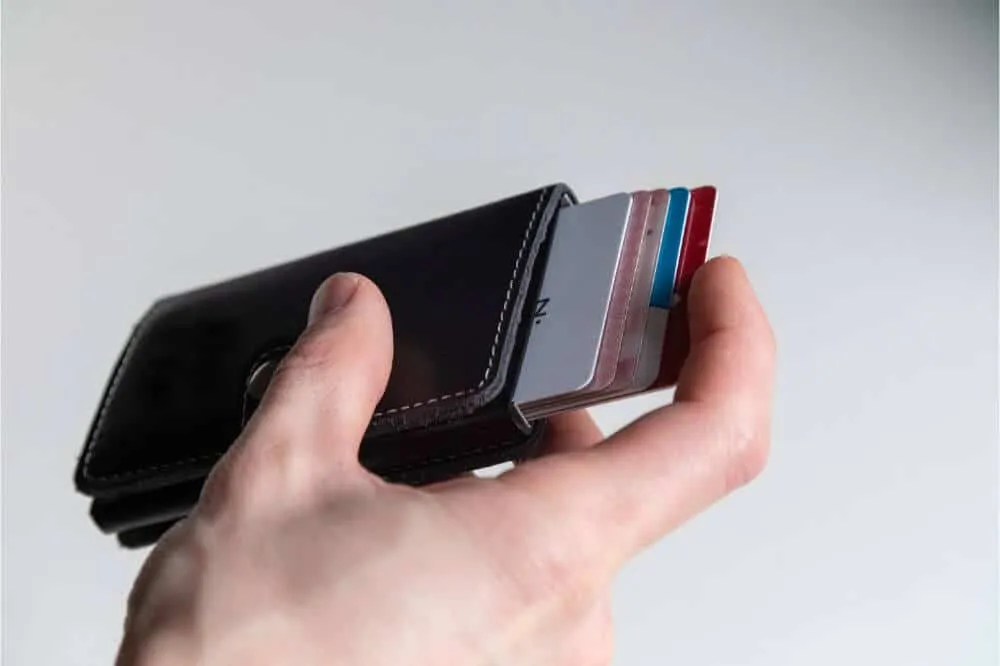
Push the small button on the side and your cards fan out in a stair pattern. Pull the one you need, push the rest back. Both use button-operated card ejection; check the model before assuming their internal parts are identical.
The catch on both: embossed cards take more room than flat ones. Ekster’s standard Cardholder guidance allows up to four embossed or six non-embossed cards, not exactly five. Follow the capacity for your model rather than forcing in a stack that jams. Cards outside the metal chamber don’t pop up with the button and shouldn’t be assumed to share its RFID shielding.
Cash Storage
Both wallets have strap-based folded-cash storage; the Parliament also has its leather wrap. Fold a few bills, slip them under the strap, done. If you carry cash daily, a full bill compartment may suit you better. It works for the occasional bill or business card.
The Parliament also has bifold pockets, so cash can sit folded inside the leather instead of strapped to the outside. That’s a real convenience advantage if you’re ever carrying more than two or three bills.
Bottom line: Same mechanism, but the Parliament adds bifold storage that the Aluminum lacks.
Leather vs Aluminum
This is the actual decision the article is about, so it’s worth being direct.
Get the Parliament if: you want extra cards in leather pockets, you like leather wallets, you carry cash often enough that the bifold matters, or you want a wallet that develops character over years.
Get the Aluminum Cardholder if: you want the slimmest possible front-pocket wallet, your daily cards fit in the ejector, you almost never carry cash, or you’d rather your wallet match your phone aesthetic than your shoes.
Both can carry a tracker, but compare the exact model’s capacity, warranty and cash layout before buying. Pro versions and newer releases have different specifications.
Where’s My Wallet? Ekster’s Tracker Card
Tracking is what makes either of these a “smart” wallet, and it’s a separate purchase. The Tracker Card is a credit-card-shaped tracker that slips into a slot on either wallet.
Ekster’s current Tracker Card charges wirelessly and pairs with Apple Find My or Google Find Hub, one network at a time. Older solar-powered and other tracker versions have different charging and app requirements, so check the exact card in the listing.
The network helps you find a misplaced wallet; it isn’t a standalone GPS device or a guarantee of recovery. Nearby compatible devices can help report its location, and the card has a ringer for finding it close by.
Ekster’s page gives conflicting IP67/IP68 water-resistance ratings in different sections. Check the instructions supplied with your card before relying on an immersion rating; keeping the leather wallet dry is still the sensible move.
Bonus Video
FAQ
Is the Ekster Senate still available?
The Senate is an older model with a support manual still online. Check with Ekster if you want that exact wallet; the present range includes several Wallet and Cardholder versions, so an old Senate description is not a guide to every current model.
Where are Ekster wallets made?
Ekster was founded in the Netherlands. Manufacturing and material sourcing can vary by product; check the country-of-origin label on the particular wallet rather than assuming the whole range is made in one place.
Do Ekster wallets break easily?
The ejector mechanism has moving parts that can jam or fail. Forcing too many cards into the chamber can cause jams. Use the capacity listed for your model; card thickness matters as much as the count.
Do Ekster wallets need to be charged?
The wallets themselves don’t. The optional Tracker Card does — the current version charges wirelessly. Older cards may charge differently, so follow your card’s instructions.
Can Ekster wallets get wet?
Keep the wallet dry, especially the leather version. A tracker’s water-resistance rating does not apply to the wallet around it.
How long does an Ekster wallet last?
Owner experiences vary: one Ekster owner reports smooth, reliable ejection over several years, while others report broken mechanisms or leather separating from the core. Card loading, dirt in the mechanism, leather care and damage all affect how it holds up. Follow your model’s card limit and keep the mechanism free of debris.
Cross-shopping the ejector-mechanism category? See how Ekster stacks up directly against Ridge and Bellroy. If you want to keep the ejector mechanism, compare Ekster vs. Secrid for differences in card loading, cash storage, and access.
Post cover image provided by Ekster Press Kit.