 The Wallet Shoppe
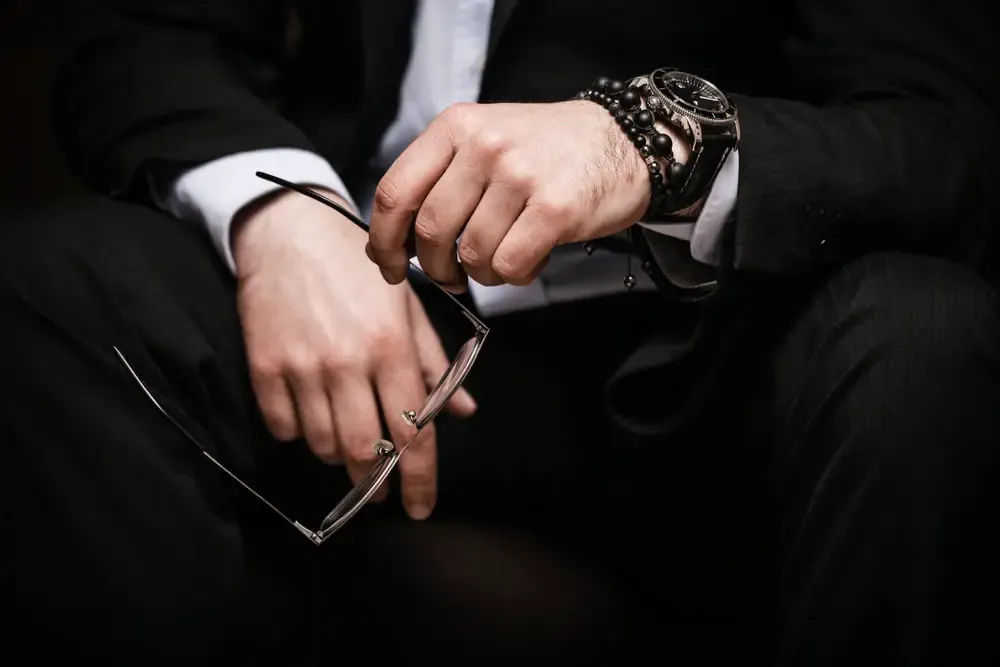
The accessories worth keeping are the ones you enjoy using: a wallet that fits your pocket, a bag that carries the day’s load, a watch that feels comfortable under your cuff. Start there, then use color and texture to make them feel part of the outfit.
You don’t need to buy every category below. A few pieces that work with your clothes will get more use than a drawer full of accessories bought for an imaginary occasion.
Which Accessories Are Worth Starting With?
Start with the gaps in your routine. If your cards are loose in your pocket, a wallet earns its place. If you keep juggling a laptop and charger, a bag does. A watch, ring or scarf can be a pleasure in its own right; it doesn’t have to prove that you are successful or properly dressed.
| Accessory | Choose it for | Check before buying |
|---|---|---|
| Wallet | Keeping the cards and cash you use together | Its size when loaded, and how easily you reach your most-used card. |
| Bag | Carrying what won’t comfortably fit in your pockets | The loaded weight, strap comfort and space for your actual laptop or other essentials. |
| Belt | Supporting trousers and finishing the waistband | Width, buckle size and how it looks with the shoes you wear most. |
| Watch | Telling the time and wearing a design you enjoy | Comfort, legibility and whether it fits under your usual sleeves. |
| Tie or pocket square | Adding color or pattern to a jacket | The occasion’s dress code and how it works with the shirt. |
| Scarf or hat | Warmth, shade and a change of texture | Whether it suits the weather and the coat or jacket it will accompany. |
Wallets and Bags: Get the Everyday Pieces Right
A wallet looks better in use when it holds what you need without being forced shut. Empty the receipts and expired cards before deciding you need a bigger one. A slim cardholder suits a light load; a bifold gives cash more room. Our guide to wallet types explains the tradeoffs.
The same principle applies to a bag. Buy for the things you carry, then choose the finish. A leather messenger bag can work well with a knit and tailored trousers; a simple nylon backpack may be the better choice for a wet commute. A bag that hurts your shoulder isn’t improved by matching your belt.
Try the bag with your coat as well as your shirt. Check that the strap adjusts far enough and that you can reach the pockets while wearing it. For a heavier daily load, compare backpacks and messenger bags before choosing by appearance alone.
Belts and Leather Colors
A belt close to the color of your shoes is an easy starting point, especially with tailored clothes. Black shoes and a black belt keep the choice simple. Brown shades can vary a little; aim for a combination that looks deliberate rather than demanding an exact dye match.
The bag and wallet have more freedom. You can carry a brown leather bag with black shoes, or use a brightly colored wallet without repeating that color in your tie. Matching every leather item can become more work than the outfit deserves.
Buckle size changes the effect too. A narrow belt with a modest buckle sits quietly with trousers, while a wider, heavier belt feels more at home with denim. If color is the sticking point, our clothing and color guide includes outfits built around black and gray.
Which Hand Does a Watch Go On?
Wear a watch on whichever wrist is comfortable. The usual starting point is your non-dominant wrist: the left if you are right-handed, or the right if you are left-handed. There is no requirement to follow that convention, and wearing a watch on your right wrist is perfectly reasonable.
Timex’s fitting advice describes the non-dominant wrist as the traditional choice, while putting comfort and personal preference first. It can keep the watch out of the way of the hand you use most. Try writing, typing and putting on your jacket before deciding which side suits you.
Place the case on the forearm side of the wrist bone, where it can sit without pushing into the back of your hand when you bend your wrist. Adjust the strap so the watch stays in place without pinching. For a smartwatch or fitness watch, follow the maker’s fit instructions for its sensors.
Should Left-Handed People Wear a Watch on the Right?
The right wrist is a sensible first try if you are left-handed, but your own routine matters more. You may prefer your left wrist from habit or find one side more comfortable at a desk. Check whether the crown or buttons press against your hand and whether you can operate them easily.
The choice has nothing to do with gender, relationship status or a dress code. Wear it where it works for you.
Choosing a Watch for Your Clothes
Look at the watch under the sleeve you will actually wear. A slim case can slide beneath a shirt cuff; a large case may catch on it. Try the combination with your arm bent, rather than judging only with your sleeve pushed up.
A leather strap, metal bracelet and fabric strap give the same watch different moods. A plain dark strap is an easy option with tailored clothes; fabric can work well with casual pieces. Follow the manufacturer’s compatibility instructions when changing straps, and check the fastening before wearing it.
Ties, Pocket Squares and Cufflinks
A plain shirt gives a patterned tie room to be noticed. If the shirt is patterned too, keep the colors related and give the patterns noticeably different scales. A fine stripe and a larger spot are easier to distinguish than two nearly identical small patterns.
A pocket square can pick up one color from the tie without repeating the whole design. White linen is an uncomplicated choice with many jackets. Our preference is to let one item be the more noticeable part: a strong tie with a quiet square, or a patterned square with a plain tie.
How to Wear Cufflinks
Use a shirt with cuffs designed for cufflinks, such as French cuffs, also called double cuffs. An ordinary button cuff may not have the necessary holes. Moss’s cufflink guide shows how to choose a suitable cuff and fasten it.
For a French cuff with a swivel-back cufflink:
- Fold the long cuff back so the buttonholes line up.
- Bring the two edges together with their inner faces touching. Align all the holes.
- Turn the swivel bar in line with the post and pass it through the holes from the outside of your wrist. The decorative face stays on the outside.
- Turn the bar across the post to secure it, then check that the cuff sits comfortably.
Chain-link and fixed-back designs fasten differently; English Cufflinks illustrates the common constructions. Use the instructions for your pair rather than forcing a part that doesn’t swivel.
A small, plain pair is easy to wear repeatedly. A personal design can be a nice detail, too. Match the occasion and the shirt before worrying about whether every visible metal has exactly the same finish.
Jewelry, Scarves and Hats
Rings and bracelets don’t need a complicated set of rules. Begin with a piece you like and check how it feels through the day. A bracelet that repeatedly knocks against your watch may be more comfortable on the other wrist. Mixed metals can work; keeping the shapes simple makes the combination easier to judge.
Choose a scarf’s weight around your coat. A bulky wool scarf can sit well with a substantial winter coat, while a lighter scarf is easier to manage with a less structured jacket. If most of your clothes are navy, black or gray, a burgundy or muted green scarf is a small way to add color.
For hats, start with weather and fit. A beanie with casual winter clothes or a cap with jeans is easy to repeat. A more structured hat asks more of the rest of the outfit, so try it with the coat and shoes you plan to wear rather than judging it in isolation.
How Many Accessories Should You Wear at Once?
There is no useful fixed number. A belt, watch and wallet can be almost invisible together, while one large buckle can dominate an outfit. Look at what attracts your eye first and decide whether that is what you intended.
Put on your normal clothes and add the piece you are most interested in wearing. Then add the things you need to carry. If the result feels busy, take away one decorative item and look again. Keep the combination that feels comfortable enough to leave the house in without adjusting it all evening.