 The Wallet Shoppe
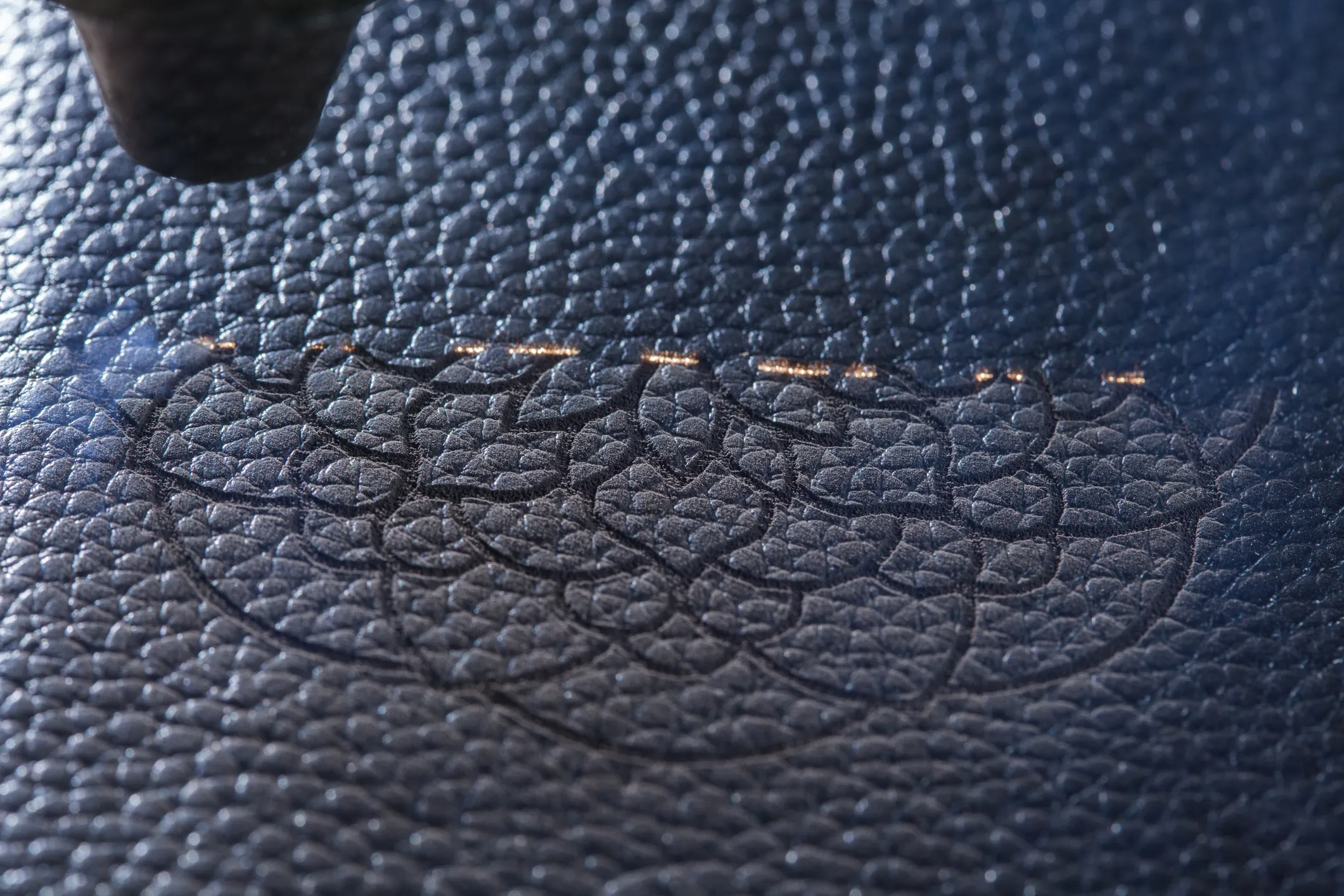
Many wallets can be engraved or stamped, but the method has to suit the material and finish. A leather wallet, a coated metal cardholder, and a synthetic wallet shouldn’t all receive the same treatment.
For a gift, the simplest option is often the maker’s personalization service. If you already own the wallet, ask an engraver to assess it before trying a tool on the finished surface.
1. Diamond-Drag Engraving
A diamond-tipped tool scratches a design into a suitable surface without spinning the tip. Gravotech’s cutter guide distinguishes this shallow marking from rotary cutting. Engravers use it for lettering and other marks on compatible hard materials. The shape of the wallet, its coating, and whether a panel can be held securely affect the result.
Ask to see an example on the same material and finish. A sample on a flat metal tag won’t necessarily show how a coated wallet will look.
2. Rotary and Other Mechanical Engraving
Diamond drag is also a mechanical method. Other mechanical tools mark the surface using a cutting or vibrating tip. Rotary engraving uses a rotating cutter; other handheld engravers work differently. Tool type and material compatibility matter more than the promise that one tool can personalize everything.
Practice on a separate piece of the same material before working on a wallet. A curved panel, thin shell, or nearby fastener can make the job harder than it looks. If you only want initials on one wallet, paying an engraver may be more sensible than buying equipment.
3. Laser Engraving
A laser can make detailed marks on compatible materials, but not every laser works on every material. Confirm both the wallet’s composition and the machine manufacturer’s approved materials before proceeding.
This is especially important with synthetic leather and coatings. Trotec’s material guidance excludes PVC and leather or artificial leather containing chromium(VI) from laser processing. Don’t guess from the wallet’s appearance or assume that a “leather” label tells you its full composition.
For an existing wallet with an unknown finish or backing, use a professional who can establish compatibility, or choose another personalization method. Follow the equipment manufacturer’s enclosure, extraction, and operating requirements.
4. Leather Stamping and Debossing
Stamping presses a design into suitable leather. Debossing leaves a recessed mark; foil stamping adds a colored or metallic finish. These aren’t engraving in the strict sense, but they are common ways to add initials to a wallet.
The leather’s finish, thickness, and construction determine how well it takes an impression. A completed wallet also needs support beneath the stamping area, without damaging a lining or card pocket. Ask the maker where personalization can go and how large the lettering can be.
Buying leather stamps doesn’t make every finished wallet suitable for stamping. Our leather types guide explains the labels, but the wallet maker is the better source for how a particular finish will respond.
Before You Approve the Work
Confirm the exact spelling, capitalization, font, and position. Ask for a layout proof if the design is more than a few initials, and check the maker’s return policy before personalizing a new wallet.
Keep the design away from stitching, hinges, clips, and other working parts. A small, legible mark in a suitable area is a better result than a large design that weakens the wallet or disappears into its texture.